A roof replacement is one of the messiest, heaviest jobs a homeowner in Clifton Park will ever tackle. When those old shingles come off, they have to go somewhere, and a pile of tear-off debris in the yard adds up faster and heavier than almost any other renovation project. Choosing the right roll-off dumpster for the job is not about grabbing the biggest container on the lot. It is about matching the bin to the weight of your roof, protecting your property, and keeping the project moving on schedule. Get the sizing right and the whole job gets easier. Get it wrong and you are paying for wasted space or, worse, overloading a container you cannot legally move.
Why Roofing Debris Is Different From Other Junk
Most homeowners think about dumpster size in terms of volume. That works fine when you are clearing out a garage, gutting a bathroom, or hauling away brush. Roofing is a different animal. Shingles are dense, layered, and saturated with asphalt, which means a container can hit its weight limit long before it ever looks full. A 20-yard bin loaded with roofing debris may sit only half-full to the eye while already carrying several tons of material.
This is the single most important thing to understand before you rent: with a tear-off, weight governs everything. That is why the local pros here in Saratoga County almost always steer roofing customers toward a smaller, weight-appropriate bin rather than an oversized one. A right-sized container keeps you compliant with road-weight limits, keeps the haul legal, and keeps your flat rate predictable. If you want to talk through the specifics of a roofing job before you book, our team offers roofing dumpster rental guidance built around exactly these weight realities.
Estimating Your Roof Debris by the Square
Roofers measure roofs in squares, and learning this one unit of measurement makes sizing a dumpster far more accurate. One roofing square equals 100 square feet of roof surface, or a 10-foot by 10-foot area. A typical single-story Clifton Park ranch or Cape might run 15 to 20 squares, while a larger two-story colonial can reach 25 to 35 squares or more once you account for pitch and overhangs.
Here is a rule of thumb that holds up well for asphalt shingle tear-offs:
- One square of single-layer shingles weighs roughly 230 to 250 pounds once torn off.
- 10 squares of single-layer material produces around 2,300 to 2,500 pounds of debris.
- 20 squares pushes you into the 4,500 to 5,000 pound range for a single layer alone.
To estimate your own roof, take the footprint of your house, add for the pitch (a steeper roof has more surface area than the ground it covers), and divide by 100 to get your square count. When in doubt, count the number of shingle bundles a contractor quotes you: three bundles equal one square. Once you know your squares, you can predict your debris weight, and weight is what dictates the bin.
Why Shingles Are So Heavy, and Why Bigger Is Not Better
It is tempting to assume that a larger dumpster is the safe choice. For roofing, that instinct usually backfires. Because shingles are so dense, an oversized container invites you to keep loading past the point where the weight is manageable. A 30 or 40 yard bin filled with shingles becomes impossible to haul legally and can rack up overage charges that dwarf any convenience it offered.
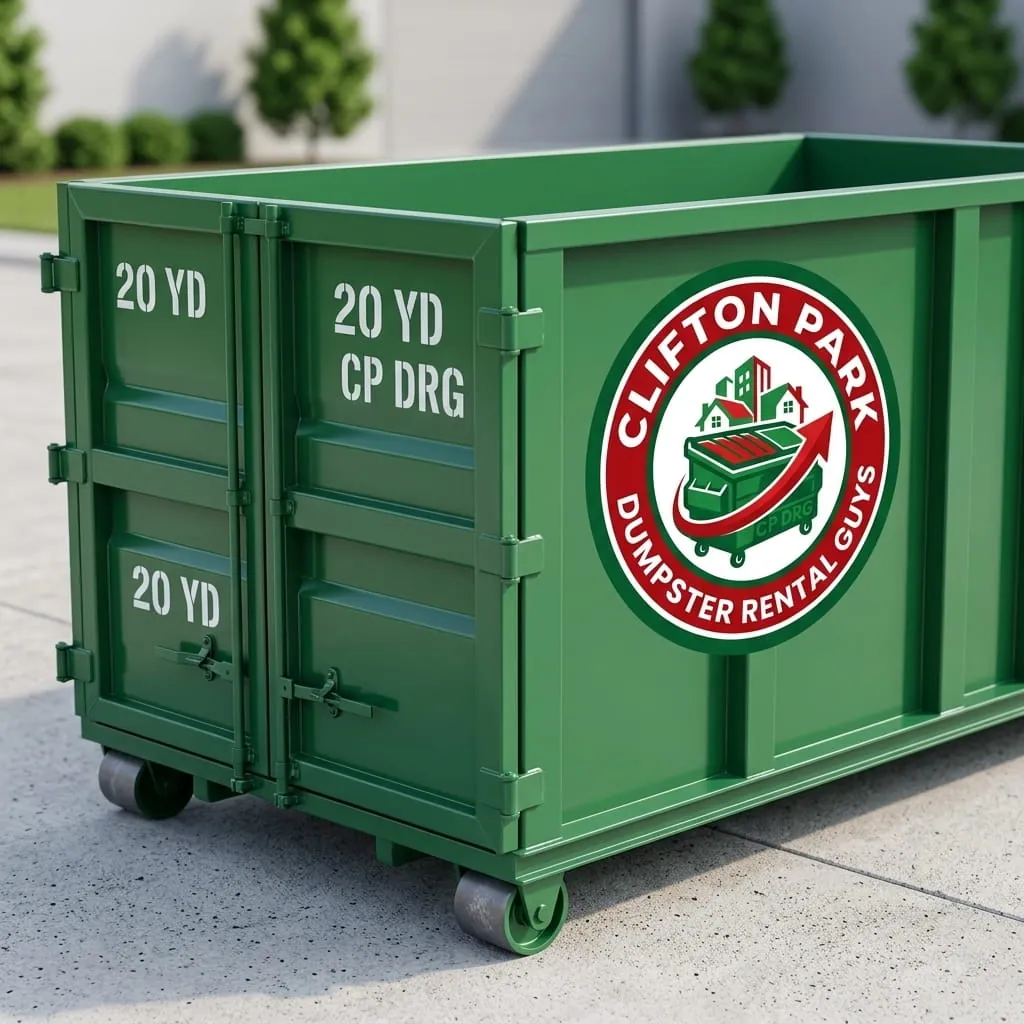
For most residential tear-offs in the Capital Region, a 15-yard dumpster is the workhorse, with a 20-yard as the step up for larger or multi-layer roofs. Here is how that maps to real jobs:
- 15-yard bin: ideal for single-layer tear-offs up to roughly 20 to 25 squares. Compact footprint, easy to place on a residential driveway, and hard to overload.
- 20-yard bin: the right pick for larger single-layer roofs or a two-layer tear-off on a mid-sized home.
The compact footprint matters more than people expect. A 15 or 20 yard container fits neatly on a standard driveway without swallowing the whole thing, and it keeps the loading height low so your crew is not throwing shingles over a tall wall all day. Because we run a flat-rate model, sizing correctly also means you know your price up front, with no surprise weight tickets after the fact.
Single-Layer vs. Multi-Layer Tear-Offs
Older homes across Clifton Park, Halfmoon, and the surrounding Saratoga County towns frequently carry two or even three layers of shingles. For decades it was common practice to roof directly over an existing layer rather than tearing off, which saved labor at the time but doubles or triples the debris weight now that the roof finally needs full replacement.
This is where sizing gets serious. A roof that would be a comfortable single-layer 15-yard job can easily need a 20-yard bin, or even two hauls, once you factor in a second and third layer. Every additional layer adds another 230-plus pounds per square. On a 20-square roof, going from one layer to two layers can add more than 4,000 pounds of debris.
Before you book, find out how many layers you are dealing with. A contractor can usually tell from a quick inspection at the roof edge or a vent penetration. If you are managing the tear-off yourself, lift a shingle at the eave and count the courses. Knowing your layer count up front prevents the classic mistake of ordering one bin and discovering halfway through the day that you need a second.
Nails, Underlayment, and the Cleanup Most People Forget
Shingles are only part of the debris stream. A complete tear-off also generates underlayment (felt or synthetic), old flashing, drip edge, ridge caps, and thousands of roofing nails. The nails are the part that catches homeowners off guard, because they end up everywhere: in the gutters, in the flower beds, and scattered across the driveway and lawn.
A few practical tips keep the cleanup under control:
- Run a magnetic sweeper over the driveway, walkways, and yard at the end of each day, not just at the end of the job. Nails migrate, and one left in the driveway can flatten a tire.
- Bag underlayment and small debris separately so it does not blow around, then load it into the same roll-off with the shingles.
- Keep old flashing and metal in the bin as well; roofing metal is fine to mix with asphalt shingle debris in a standard container.
Watch the Weather Window
In our climate, roofing is seasonal. Snow load and ice dams are a leading cause of roof failure here, and freeze-thaw cycles slowly work shingles loose year after year. That damage tends to reveal itself in late winter and drive a wave of replacements in spring and summer, which is the prime roofing window in the Capital Region. If your roof took a beating over the winter, plan your tear-off and your dumpster rental for a stretch of dry weather so exposed decking does not sit open to the elements.
Protecting Your Driveway and Booking the Right Bin
Placement is the last piece of a smooth roofing job. A loaded roll-off is heavy, and you want it close to the house so your crew is not hauling shingles across the whole yard, but you also want to protect your driveway from scuffs and point-load damage. Lay down plywood or boards under the container's wheels and contact points, especially on asphalt driveways that soften in Capital Region summer heat. A sheet of plywood spreads the load and prevents divots.
Position the bin so the roof crew can toss debris directly into it from a ladder or a tarp chute, keep it clear of low branches and power lines, and make sure the delivery truck has a straight approach. A quick conversation about your roof size, layer count, and driveway layout is usually all it takes to land on the right container. For a single-layer job, the 15-yard almost always wins; for heavier multi-layer roofs, step up to the 20-yard.
Ready to size your roofing dumpster the right way? Call Clifton Park Dumpster Rental Guys at (518) 608-2989 for straight answers and flat-rate pricing, or reach out through our contact page and we will help you match the perfect bin to your tear-off.

Founder, Clifton Park Dumpster Rental Guys — sharing straight advice from more than 15 years of local hauling experience.