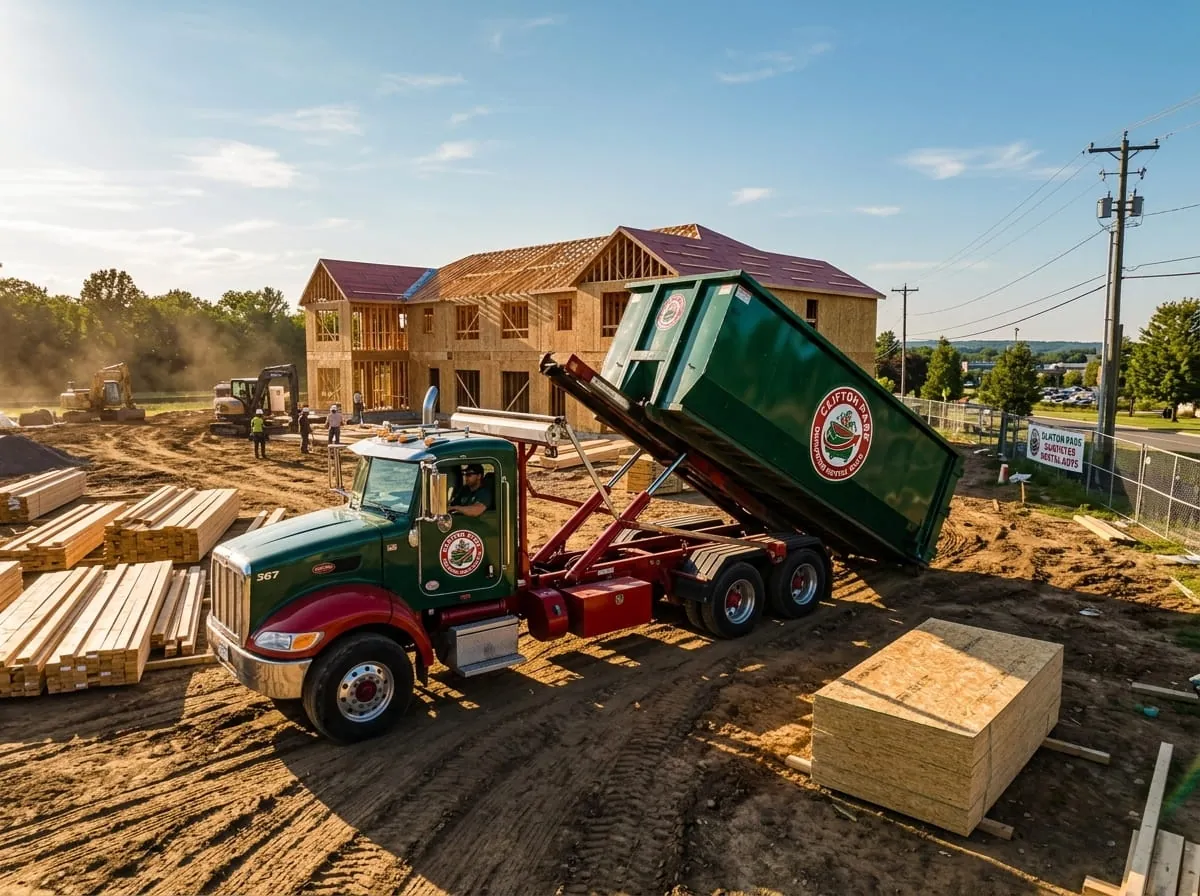
Renovating a colonial off Route 9 or framing a new build in one of Clifton Park's fast-growing subdivisions produces one constant: debris, and lots of it. Construction and demolition (C&D) waste is heavy, mixed, and heavily regulated in New York. Handle it wrong and you burn money on overweight tickets, stall your crew, and risk a messy jobsite that draws code complaints. Handle it right and disposal becomes a quiet, predictable line item that keeps framing and finish on schedule. This guide walks contractors and DIY remodelers across Saratoga County through disposing of construction debris the correct way, from sorting materials to scheduling swaps.
Start by Sorting: What Counts as C&D Debris
Construction and demolition debris is not one thing. It is a bundle of very different materials, each with its own weight, recyclability, and disposal path. Sorting at the source, even loosely, saves you money and keeps a container from filling with the wrong material. The core categories on most Capital Region jobsites are:
- Wood - framing lumber, sheathing, trim, and pallets. Light and clean, it is one of the most recyclable streams.
- Drywall - gypsum board scrap. Bulky but relatively light; some facilities recycle it into new board or soil amendments.
- Roofing - asphalt shingles and underlayment. Deceptively heavy; a single tear-off can blow past a weight limit fast.
- Metal - flashing, ductwork, conduit, rebar, and fixtures. Almost always worth separating for scrap value.
- Concrete, brick, and block - the heaviest stream by far, and the one that most often needs its own dedicated container.
Older Clifton Park and Ballston homes add a wrinkle: plaster-and-lath. When you gut a century-old interior, you are pulling out dense plaster over wood lath, which weighs far more than modern drywall and mixes wood, gypsum, and horsehair binder into one awkward load. Plan for that weight before it surprises you at the scale.
Roll-Off Dumpsters vs. Dedicated Heavy-Debris Bins
A standard roll-off dumpster is the workhorse of any remodel. It handles mixed C&D debris well: wood, drywall, roofing, general demolition, insulation, packaging, and light metal all go in the same box. For a kitchen gut, a bathroom remodel, a full-house renovation, or new framing scrap, a roll-off is exactly the right tool. Our construction dumpster rental containers come in sizes matched to the job so you are not paying for air or cramming a bin that is too small.
Concrete, brick, block, asphalt, and dirt are a different animal. These materials are so dense that a normal-sized container full of them can exceed what a truck is legally allowed to haul on New York roads. That is why heavy inert debris goes into a dedicated heavy-debris bin, typically a smaller container with a strict fill line. Mixing a tear-out slab into your general C&D roll-off is the single most common way contractors rack up overweight charges.
A quick rule of thumb
- Mixed and lightweight? Standard roll-off.
- Pure concrete, masonry, or dirt? Dedicated heavy-debris bin.
- Not sure? Call and describe the load - we will spec it so you avoid a surprise.
Weight Limits and Tonnage: Where Budgets Break
Every dumpster has two limits: how much it holds by volume, and how much it can weigh. On a C&D job, weight is almost always the constraint that bites first. Flat-rate pricing includes a tonnage allowance, and material that goes over that allowance costs more per ton. The trap is that heavy debris looks harmless because it fills so little space.
Consider what actually moves the needle in this region:
- Asphalt shingle tear-offs can run one to three tons per typical residential roof, depending on how many layers you strip.
- Plaster-and-lath from an old-home gut is far heavier per cubic yard than modern drywall.
- Wet materials - anything rain- or snow-soaked - gains real weight, a common issue on Capital Region jobs where a container sits open through a storm.
- Concrete and masonry hit the weight ceiling long before the box looks full.
The fix is straightforward: keep dense material in the right container, keep the lid or tarp on when weather threatens, and be honest about your load when you book so the tonnage allowance matches reality. A five-minute conversation up front beats an overweight ticket at the end.
Recycling C&D Materials and Staying Compliant in New York
New York takes C&D disposal seriously, and Saratoga County contractors are expected to keep up. The state's regulations govern where C&D debris can go, which materials must be separated, and how transfer and recycling facilities operate. Tipping fees - the per-ton charge at the disposal facility - are a real cost baked into your dumpster price, and they climb with weight, which is one more reason sorting pays off.
Recycling is not just good citizenship here; it often lowers cost. Clean, separated streams frequently tip cheaper than mixed debris, and several materials have strong recycling paths:
- Metal has scrap value and is almost always diverted.
- Clean wood can be chipped for mulch or biomass.
- Concrete and masonry get crushed into reusable aggregate.
- Cardboard and clean drywall are recyclable at facilities that accept them.
A few materials are strictly regulated and should never go in a general roll-off: asbestos, lead-painted debris, certain treated woods, and hazardous liquids. Pre-1980 Clifton Park homes may hide asbestos in old flooring, pipe wrap, or siding, and lead paint under newer coats. If you suspect either, stop and arrange proper abatement - it is a legal and safety line, not a judgment call.
Keeping the Jobsite Clean, Compliant, and Moving Through Winter
A clean site is a safe site and a fast site. Debris scattered across a work area slows every trade behind you, invites injuries, and in occupied neighborhoods can draw code enforcement. Placing a container in the right spot and using it consistently is one of the cheapest productivity gains on any project.
Placement matters more here than in milder climates. Between the Northway corridor's tight newer lots and older Clifton Park streets with narrow drives, think through delivery access and where a loaded truck can maneuver. Then plan for winter, because Capital Region jobs run straight through it:
- Keep the drop zone plowed and sanded so the delivery and swap trucks can reach it.
- Leave clearance for snowbanks - a spot that works in October can be buried by January.
- Tarp or close the container ahead of snow to keep frozen weight out of your tonnage.
- Protect driveways with boards under the rails on soft or frost-heaved surfaces.
Good communication with your hauler about access conditions prevents the failed-delivery delays that quietly wreck a winter schedule.
Scheduling Swaps to Keep Framing and Finish on Track
Disposal is a scheduling problem as much as a waste problem. A full container that is not swapped fast enough becomes a bottleneck: framers stop framing to walk debris, or finish carpenters work around a pile that should have left the site days ago. The goal is a container that is always ready when the crew produces waste and gone when the phase changes.
Match your swap rhythm to the work:
- Demolition and tear-out generate debris in fast bursts - line up a swap before you start, not after the box overflows.
- Framing produces steady wood scrap; a single well-sized roll-off often carries the phase.
- Roofing needs its own weight-aware plan given how heavy tear-offs run.
- Finish work produces lighter, cleaner waste - a good moment to right-size down.
Because we are call-only and flat-rate, scheduling a swap is a single phone call with a price you already know - no portal, no surprise invoice. Tell us your phase and timeline and we will keep an empty container in front of your crew so the schedule, not the dumpster, sets the pace.
Get the Right Container on Site
Disposing of construction debris the right way comes down to sorting smart, matching material to the correct container, respecting weight limits, and swapping on schedule. Clifton Park Dumpster Rental Guys handles the rest with flat-rate pricing and local know-how across Saratoga County. Call (518) 608-2989 to spec the right roll-off for your project and keep your jobsite clean, compliant, and on schedule.
Founder, Clifton Park Dumpster Rental Guys — sharing straight advice from more than 15 years of local hauling experience.